 SkyDance Vascular
SkyDance Vascular
SkyDance Vascular

Now recognized and endorsed for alignment with ANTT® (Aseptic Non Touch Technique) principles.
Read MoreThe OspreyIV vascular access platform uses Through-the-Needle (TTN) catheter deployment technology to create an entirely new category in peripheral vascular access.
Need a title here
In a traditional design, the catheter is mounted over-the-needle (OTN). Direct catheter to skin contact occurs with every insertion. The OspreyIV carries the catheter through-the-needle (TTN), protecting it from harmful insertion-related contamination. That single change is the one that changes everything.
Need a title here
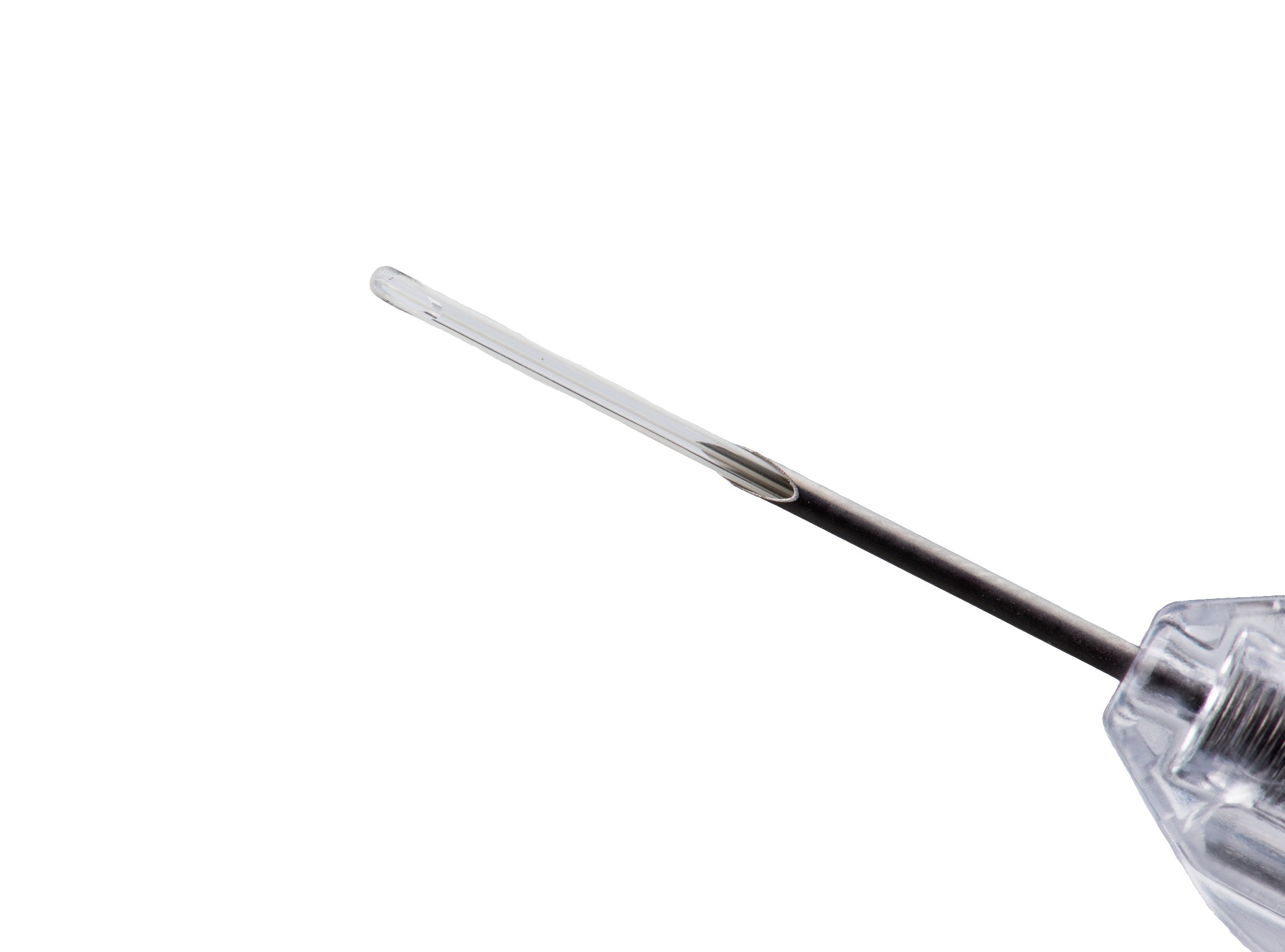
Simple needle bevel entry is intended to eliminate the need to lower the device, further advance, and “walk” the catheter into the vessel during insertion.
Through-the-Needle (TTN) catheter deployment is engineered to create a physical barrier protecting the catheter surface from direct contact with harmful skin flora during insertion.
Without any additional steps, the needle automatically retracts into the Osprey housing as the catheter is fully advanced, where it is safely and permanently retained.
Off-axis catheter tip design is intended to minimize trauma during catheter advancement, then go on to direct infusions away from the vessel wall and into high hemodilution areas.
The foundational through-the-needle platform for everyday peripheral access.
A closed configuration designed to limit blood exposure during placement.
Extended dwell access for patients who need a longer, vessel-preserving line.
Begin a product evaluation, request a value-analysis packet, or open an ordering conversation with SkyDance Vascular.
Traditional over-the-needle catheters expose the catheter at insertion. OspreyIV changes the pathway by carrying the catheter through the needle until placement.
Every commercially available PIVC mounts the catheter over the needle. Materials and safety mechanisms have improved incrementally, yet the fundamental over-the-needle design has remained unchanged for more than 70 years, and with it a set of measurable, device-driven risks.
The OspreyIV carries the catheter through the needle. Below is the risk each OspreyIV feature was engineered to address, with the published figures behind it.
A traditional catheter has a shoulder where it tapers over the needle, changing push force so practitioners may press ineffectively against the vessel wall. In a pilot study of 371 patients across medical, surgical, pediatric, and intensive-care units, attempts ranged from 1 to 14.
The OspreyIV catheter sits within the needle. As the needle enters the vessel, so does the catheter, with no further advancement or repositioning.
Addressed by Bevel Only Technique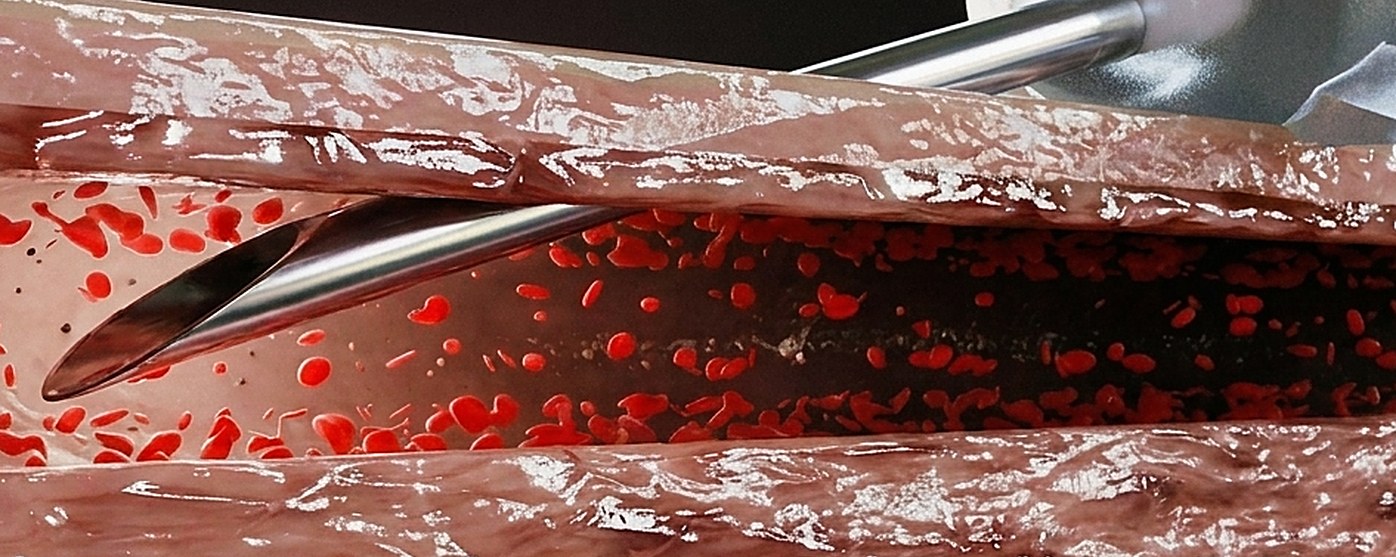
The skin cannot be fully sterilized before insertion, and roughly 20% of skin flora lives below the surface in hair follicles and glands. Over-the-needle catheters contact that flora directly; it colonizes the surface, aggregates into microcolonies, and can break free into the bloodstream. An estimated 200,000 PIV bloodstream infections occur per year in the U.S., at a cost approaching $6B.
Deploying through the needle forms a physical barrier between the catheter and skin flora at the moment of insertion.
Addressed by Skin Avoidance Technology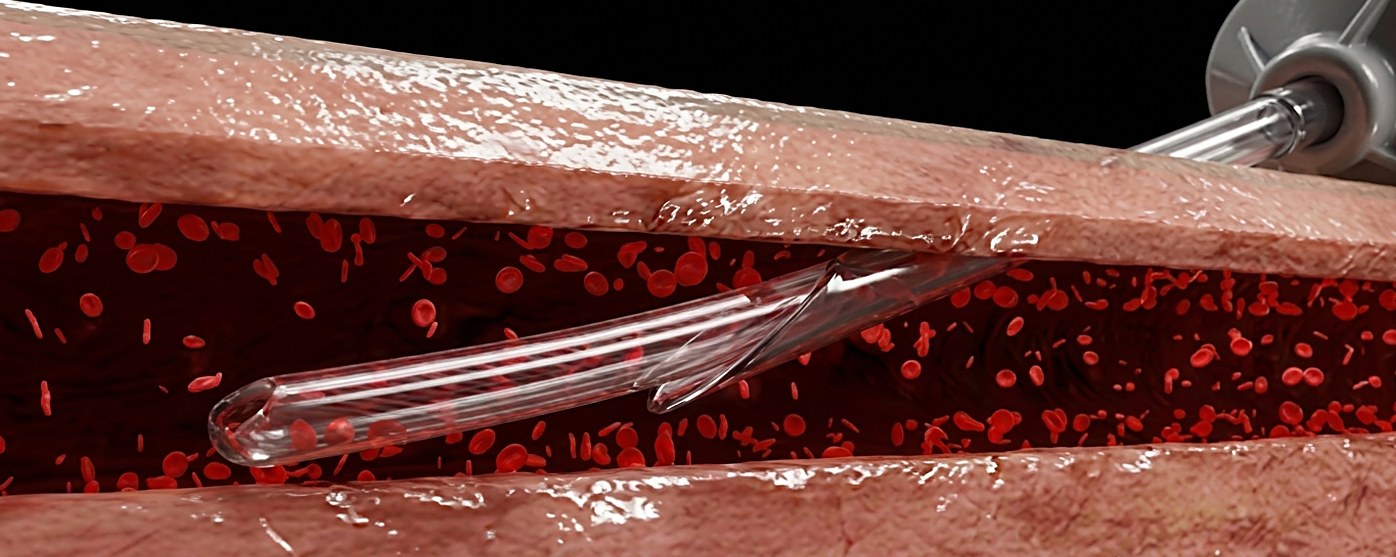
Both result from inflammation, erosion, or penetration of the catheter into or through the venous wall, driven by shear stress from rapid infusions, chemical injury from caustic infusions, or trauma at insertion. Over-the-needle designs also deposit infusions directly along the delicate inner lining of the vessel.
An off-axis tip opening advances atraumatically, then directs fluid away from the vein wall and into the higher-flow center of the vessel where it is diluted.
Addressed by Contoured Directional Flow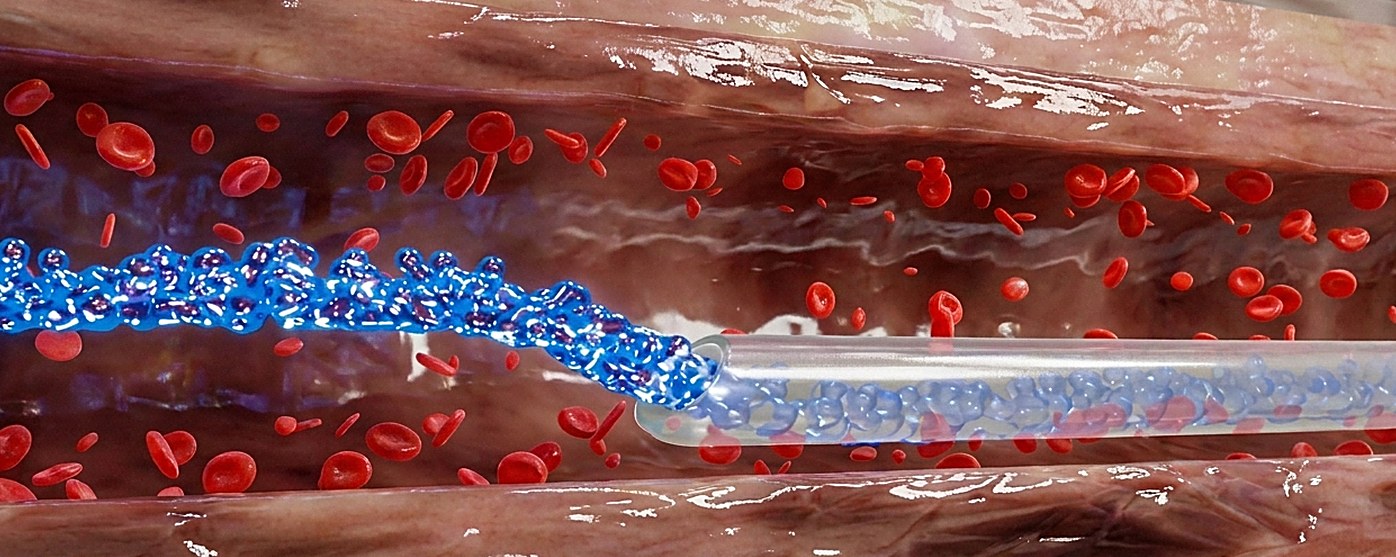
OSHA estimates 5.6 million healthcare workers are at risk of occupational exposure to bloodborne pathogens including HIV, HBV, and HCV. Hospital-based workers sustain an estimated 384,000 percutaneous injuries per year, more than 1,000 a day, and as many as one-third occur during disposal of the device.
Once the catheter is advanced, the needle automatically retracts into the housing and is permanently retained, with no separate safety step and no exposed sharp to transport.
Addressed by Passive Needle Retraction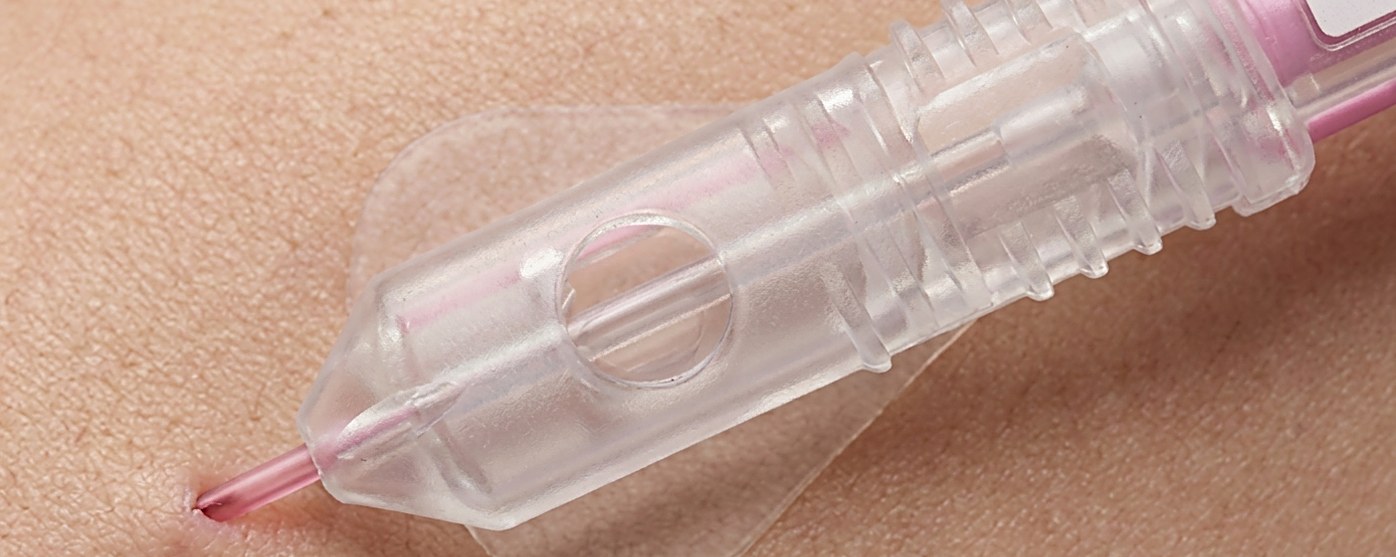
Figures reflect peer-reviewed studies and SkyDance Vascular published materials. See the evidence and white papers for sources.
Peer-reviewed studies on bioburden and flow patterns, six clinical and economic white papers, and OspreyIV eLearning are available in our resources library.
The survivability of bacterial contaminants on a retracted stainless-steel needle within a novel vascular access device. JAVA (2024) 29(4):20–25.
Read study Journal ArticleOptimizing infusate flow patterns for minimizing vein wall trauma. Ther Clin Risk Manag. 2024;20:559–566.
Read study Journal ArticleThe potential role of through-the-needle PIVC insertion in reducing early catheter contamination. JAVA 2023;28(1):14–20.
Read studyThe clinical value proposition for catheter protection during insertion.
Download PDF White Paper · PDFOutcome research on 36 million patients admitted using over 200 million PIVCs.
Download PDF White Paper · PDFA focus group in a simulated-use environment for the OspreyIV.
Download PDF White Paper · PDFAttachment during PIV insertion using through-the-needle insertion methods.
Download PDF White Paper · PDFToward the expansion of catheter-related bloodstream infection reporting to include PIVs.
Download PDF White Paper · PDFA review of catheter colonization pathways.
Download PDFRequest clinical information, a product evaluation, or partnership details from the SkyDance Vascular team.
By deploying the catheter through the needle rather than over it, the OspreyIV protects the catheter at the single most vulnerable moment: insertion.
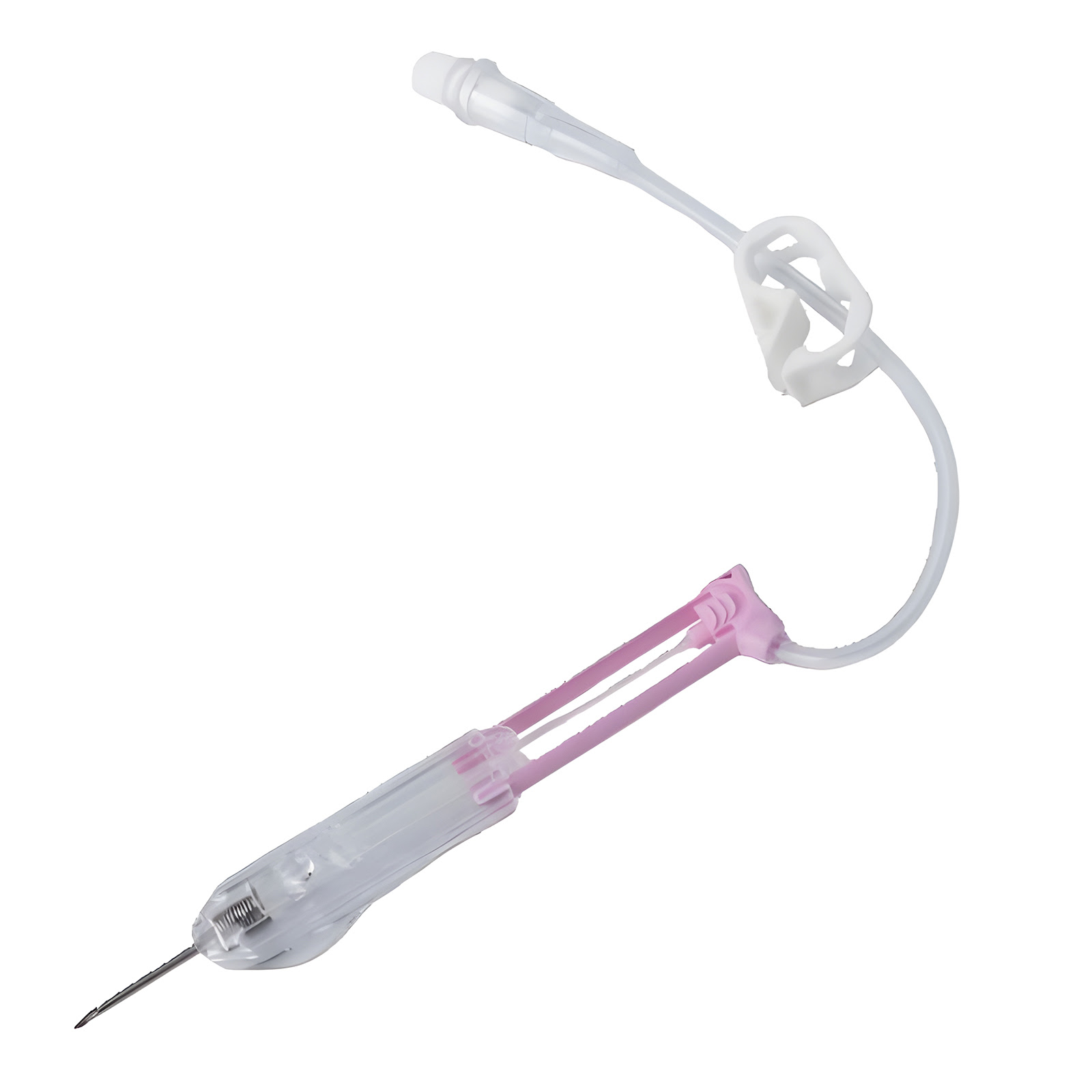
As the needle enters the vessel, so does the catheter, with no further advancement or repositioning.
The catheter deploys through the needle and never contacts skin, forming a physical barrier against contamination.
The needle automatically retracts into the housing once the catheter is advanced, and is permanently retained.
An off-axis opening delivers fluid away from the vein wall, minimizing shear stress and chemical irritation.
The foundational through-the-needle platform for everyday peripheral access.
A closed configuration designed to limit blood exposure during placement.
Extended dwell access for patients who need a longer, vessel-preserving line.
Built for vascular access teams, infection prevention, value analysis, risk management, materials management, and purchasing.
Traditional over-the-needle catheters expose the catheter at insertion. OspreyIV changes the access pathway, carrying the catheter through the needle and protecting it until placement.
Best for everyday peripheral access.
Best for blood-exposure reduction and closed workflow.
Best for extended dwell and deeper-vessel access.
Align on goals, settings, and fit.
Studies, white papers, and specs to review.
Hands-on product evaluation in your unit.
OspreyIV eLearning and in-service.
Purchasing and implementation.
Request a value-analysis packet, schedule a clinical review, or begin a product evaluation.
SkyDance Vascular is working to reduce the known complications that result from the traditional over-the-needle catheter design. The company has developed several inventive improvements, including Bevel Only Technique, Skin Avoidance Technology, Passive Needle Retraction, and Contoured Directional Flow.
The company is comprised of industry veterans with the expertise to develop, commercialize, and scale the business, with prior success building and selling startups in the vascular access space.
Collective backgrounds span leading medical device, enterprise software, and vascular access organizations including St. Jude, C.R. Bard, Med-Comp, Medibuy.com, B. Braun, Vascular Pathways, Covidien, Lumitec, and Kimberly Clark.
Leads SkyDance Vascular’s commercial and corporate strategy.
Directs clinical strategy and evidence; lead author on SkyDance’s peer-reviewed PIVC research.
Leads device engineering and product development.
Leads regulatory and quality; SkyDance holds three FDA 510(k) clearances.
Leads finance and operations.
Career medical device executive with 30+ years of success across therapeutic areas and geographies, spanning international expansion, business development, strategic repositioning, turnaround, and commercialization.
Advises on commercial brand and go-to-market strategy.
Reach us for clinical, ordering, partnership, or investor conversations.
SkyDance Vascular has obtained three FDA 510(k) clearances for new peripheral intravenous (PIV) catheter devices that use its proprietary through-the-needle catheter deployment technology: the OspreyIV in-line PIV catheter, the OspreyIV Integrated (Closed) PIV catheter, and the OspreyEDC.
Forward-looking statement. These statements reflect management’s current views with respect to future events based on information currently available and are subject to risks and uncertainties that could cause actual results to differ materially. Investors are cautioned not to place undue reliance on forward-looking statements; they are illustrative and do not represent guarantees of future results, performance, or achievements.
Contact investor relations for corporate, clearance, and partnership details.
SkyDance’s OspreyIV closed IV catheter systems are recognized and endorsed for their unique alignment with Aseptic Non Touch Technique (ANTT) principles.
Read the releaseA new extended dwell catheter system poised to advance PIVC patient safety and outcomes.
Read the releasePeer-reviewed study published, underscoring the potential of Skin Avoidance Technology in peripheral intravenous catheters.
Read the releaseAnother step in improving PIVC patient safety and outcomes from SkyDance Vascular.
Read the releaseThe latest technology from SkyDance is designed to improve safety measures for the use of peripheral intravenous catheters.
Read the releasePeer-reviewed research in the Journal of the Association for Vascular Access on SkyDance’s through-the-needle PIVC design.
Read the releaseA more comprehensive approach to the assessment and reporting of all hospital-onset bacteremia, from the Association for Vascular Access annual meeting.
Read the articleReposted from LinkedIn: why better blood culture testing leads to better patient care.
Read the articleFor press, interviews, or additional materials, reach the SkyDance Vascular team.
Choose your inquiry type and the SkyDance team will route your request to the appropriate clinical, commercial, investor, or partner contact.
The foundational through-the-needle platform for everyday peripheral access, designed to sample blood, monitor blood pressure, and administer fluids intravenously, with the catheter protected at the moment of insertion.
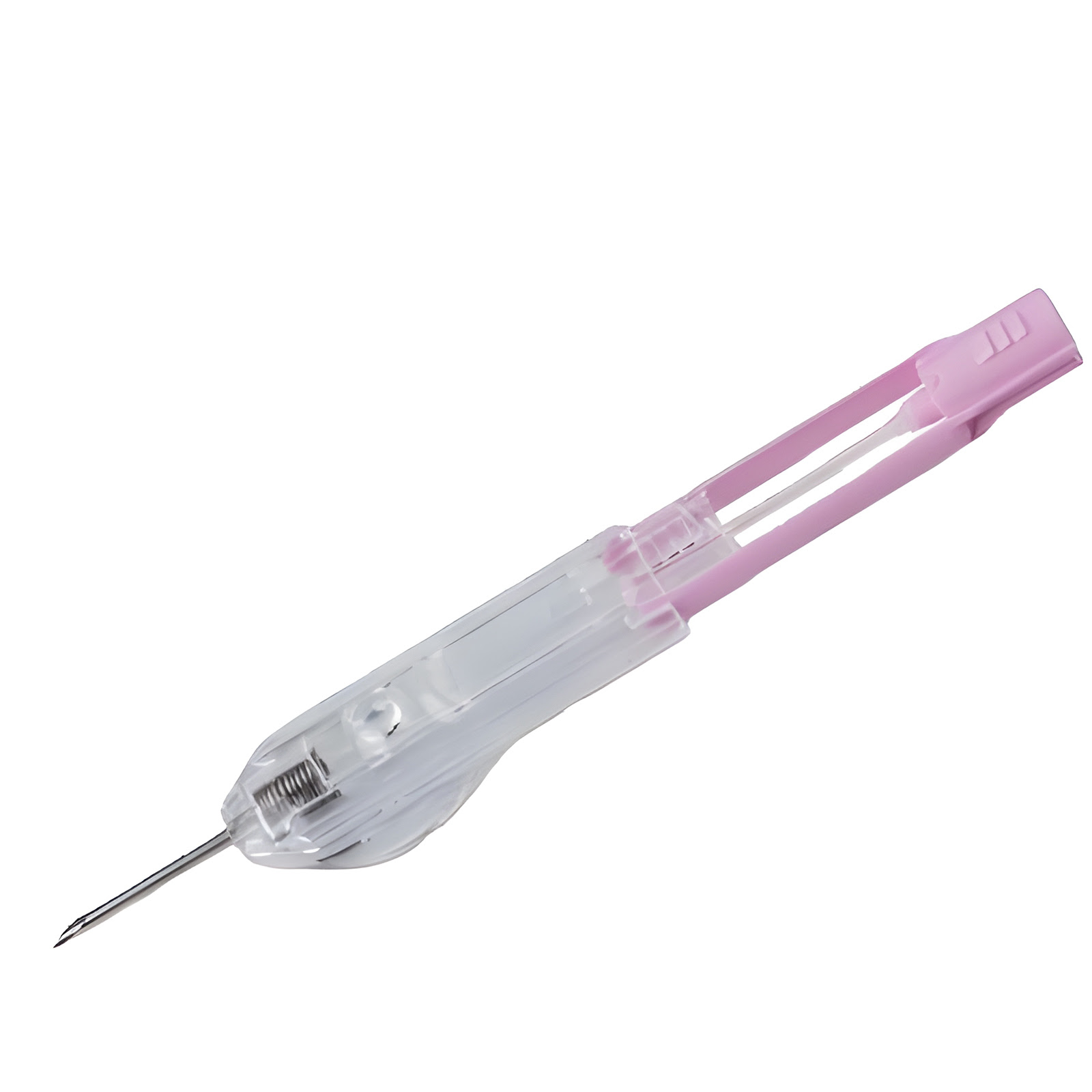
Request clinical information, a product evaluation, or ordering details from the SkyDance Vascular team.
A closed configuration with an integrated extension set, designed to limit blood exposure during placement while carrying the catheter through the needle. Power-injector compatible to 325 psi.
The integrated extension set with blood control is intended to minimize exposure and maintain a closed fluid pathway throughout placement and use. Recently recognized and endorsed for alignment with ANTT (Aseptic Non Touch Technique) principles.
Request clinical information, a product evaluation, or ordering details from the SkyDance Vascular team.
An Extended Dwell Catheter designed to reach deeper peripheral vessels for longer, vessel-preserving therapy, with the same through-the-needle protection and a closed fluid pathway.
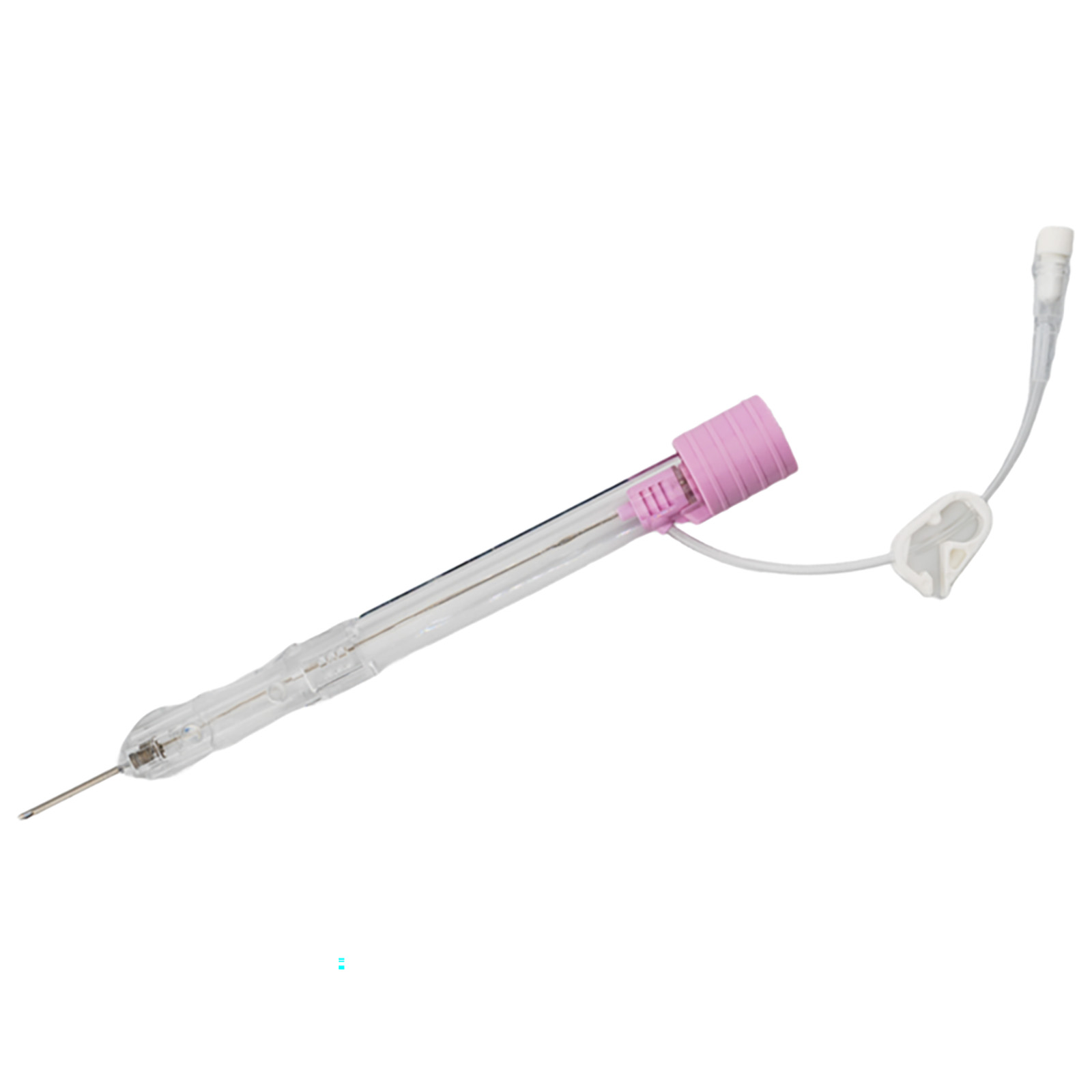
Request clinical information, a product evaluation, or ordering details from the SkyDance Vascular team.
In a traditional insertion the clinician enters with the bevel, gets a flash, then lowers the angle and walks the catheter in. Each manipulation is a chance to fail. The OspreyIV catheter rides within the needle, so as the needle enters the vessel, so does the catheter.
A traditional catheter is mounted over the needle with a shoulder where it tapers. Entering the vessel, lowering the angle, and advancing the catheter separately each add force and error, and the shoulder can push against the vessel wall ineffectively.
The catheter sits within the needle. As the needle enters the vessel, so does the catheter, with no further advancement or repositioning, eliminating the angle change and the walk-in step.
Designed for high first-attempt successReview the risk each OspreyIV feature was built to address, with the published figures behind it.
The skin cannot be fully sterilized before a stick, and roughly 20% of skin flora lives below the surface. The OspreyIV keeps the catheter housed within the needle and deploys it only once the target vein is reached, forming a physical barrier against insertion-related contamination.
Staphylococcus aureus and other flora sit on and within the skin, including below the surface in follicles and glands. A traditional over-the-needle catheter contacts that flora directly during insertion; it colonizes the surface, aggregates into microcolonies, and can break free into the bloodstream.
The OspreyIV deploys the catheter through the needle rather than over it. The catheter stays shielded within the needle until the vein is reached, creating a physical barrier between it and harmful skin bacteria at the moment of insertion.
A physical barrier at the point of insertionReview the risk each OspreyIV feature was built to address, with the published figures behind it.
Once the catheter is fully advanced, the needle automatically retracts into the housing and is permanently retained, with no additional step for the clinician and no exposed sharp to carry to the disposal box.
Contaminated needles expose clinicians to bloodborne pathogens including HIV, HBV, and HCV. Much of the risk is not at insertion but afterward, during handling and transport of the used needle to a sharps container.
Retraction is passive: it activates as the catheter is advanced, with no extra step. The needle is stored within its own housing and permanently retained, so there is no exposed sharp to transport for disposal.
No post-procedure sharps to handleReview the risk each OspreyIV feature was built to address, with the published figures behind it.
A traditional catheter tip settles against the vein wall and deposits infusions along its delicate lining. The OspreyIV uses a rounded, off-axis tip that advances atraumatically, then directs fluid toward the higher-flow center of the vessel where it is diluted.
Because the catheter is formed over the needle, its tapered tip can damage the vessel back wall and then rest against it during use. Fluid delivered straight into that wall causes shear stress and chemical irritation, driving phlebitis, infiltration, and eventual PIV failure.
A rounded tip minimizes trauma on advancement, and an off-axis opening redirects infusions away from the wall and into the center of the vessel, where faster blood flow dilutes them and protects the lining.
Fluid aimed away from the vein wallReview the risk each OspreyIV feature was built to address, with the published figures behind it.
Reach the SkyDance Vascular team for clinical, ordering, or partnership details.
Figures are model estimates. Facility-specific results may vary and are subject to validation. Assumptions are available on request; request a facility-specific projection.
Request the assumptions behind these figures and a facility-specific projection from the SkyDance Vascular team.